<?xml version="1.0" encoding="utf-8"?><feed xmlns="http://www.w3.org/2005/Atom" ><generator uri="https://jekyllrb.com/" version="3.10.0">Jekyll</generator><link href="https://infinitysugam.github.io/feed.xml" rel="self" type="application/atom+xml" /><link href="https://infinitysugam.github.io/" rel="alternate" type="text/html" /><updated>2025-04-11T07:31:16+00:00</updated><id>https://infinitysugam.github.io/feed.xml</id><title type="html">Sugam Mishra</title><subtitle>personal description</subtitle><author><name>@infinitysugam</name><email>mishrasugam11@gmail.com</email></author><entry><title type="html">Evolving with AI: A Software Engineer’s Journey</title><link href="https://infinitysugam.github.io/posts/2025/01/ai-post/" rel="alternate" type="text/html" title="Evolving with AI: A Software Engineer’s Journey" /><published>2025-02-24T00:00:00+00:00</published><updated>2025-02-24T00:00:00+00:00</updated><id>https://infinitysugam.github.io/posts/2025/01/ai-post</id><content type="html" xml:base="https://infinitysugam.github.io/posts/2025/01/ai-post/"><![CDATA[<p><img src="/assets/images/evolving-with-ai-header.png" alt="Evolving with AI: A Software Engineer’s Journey" /></p>

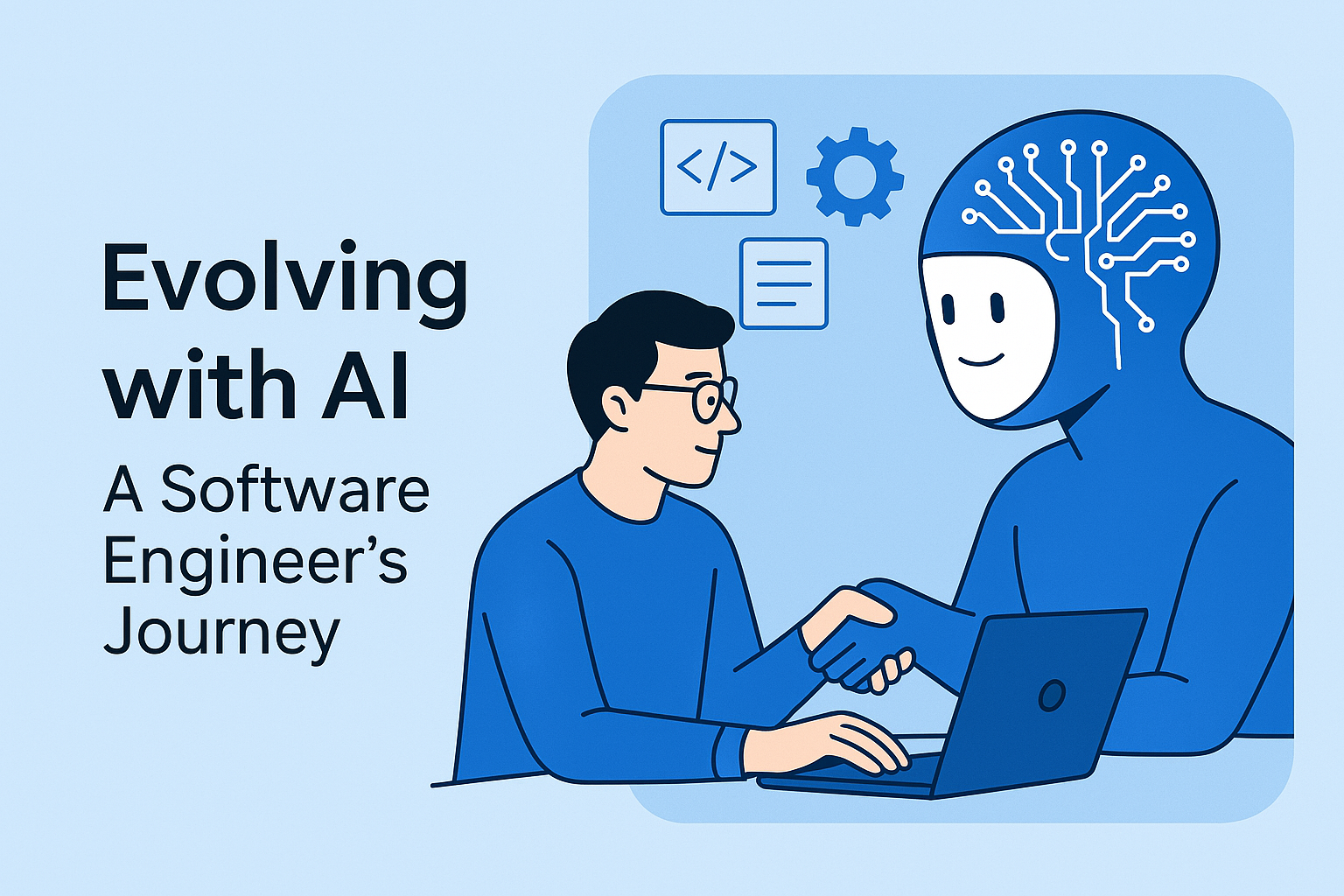
<p>The field of software engineering is undergoing a profound transformation with the rapid advancement of Artificial Intelligence (AI). As AI becomes increasingly integrated into everyday applications—from recommendation systems and chatbots to code generation and intelligent infrastructure—the role of a software engineer is expanding beyond traditional programming. To remain effective, relevant, and innovative, today’s software engineers must evolve alongside these technologies.</p>

<hr />

<h2 id="-from-code-centric-to-ai-aware">🧠 From Code-Centric to AI-Aware</h2>

<p>Historically, software engineers focused on algorithms, data structures, system design, and efficiency. While these remain foundational, the new era demands <strong>AI literacy</strong>. Engineers are now expected to understand how AI models work, how they’re trained, and how to integrate them responsibly into systems.</p>

<p>This doesn’t necessarily mean becoming an AI researcher—but it does mean knowing:</p>

<ul>
  <li>How to use pretrained models (e.g., via Hugging Face, TensorFlow Hub)</li>
  <li>Basics of model inference, latency, and optimization</li>
  <li>Data engineering principles for AI pipelines</li>
  <li>Limitations and failure modes of models (e.g., bias, hallucination)</li>
</ul>

<hr />

<h2 id="️-integrating-ai-into-software-workflows">⚙️ Integrating AI into Software Workflows</h2>

<p>AI is becoming a core part of software systems, not just a bolt-on. Engineers should know how to:</p>

<ul>
  <li><strong>Use APIs for AI models</strong> (like OpenAI, Google Vertex AI, etc.)</li>
  <li>Build <strong>inference pipelines</strong> with scalable infrastructure (e.g., FastAPI + TorchServe)</li>
  <li>Manage <strong>model lifecycle</strong>: downloading, versioning, and monitoring</li>
  <li>Deploy AI in <strong>edge, cloud, or hybrid environments</strong></li>
</ul>

<p>This represents a shift from <em>writing functions</em> to <em>orchestrating intelligent components</em>.</p>

<hr />

<h2 id="-evolving-toolkits-and-practices">📦 Evolving Toolkits and Practices</h2>

<p>The software toolchain is also evolving to include:</p>

<ul>
  <li><strong>Prompt Engineering</strong>: How you ask the model matters.</li>
  <li><strong>Vector Databases</strong>: For similarity search, retrieval-augmented generation (RAG), and memory.</li>
  <li><strong>Data-Centric Development</strong>: A focus on high-quality, well-labeled, and representative data over just models.</li>
  <li><strong>Explainability &amp; Monitoring</strong>: Interpreting model outputs and maintaining trust in production.</li>
</ul>

<p>Version control for models (<code class="language-plaintext highlighter-rouge">DVC</code>, <code class="language-plaintext highlighter-rouge">MLflow</code>), containerization (<code class="language-plaintext highlighter-rouge">Docker</code>, <code class="language-plaintext highlighter-rouge">KServe</code>), and even test-driven AI development are becoming important practices.</p>

<hr />

<h2 id="-changing-roles-and-mindsets">🧑‍💼 Changing Roles and Mindsets</h2>

<p>AI is not just changing <strong>how</strong> we build software—it’s changing <strong>what</strong> we build and how we think about the role of software itself. Software engineers are evolving into:</p>

<ul>
  <li><strong>AI-Enhanced Developers</strong>: Using tools like GitHub Copilot or TabNine to speed up coding.</li>
  <li><strong>AI System Integrators</strong>: Designing workflows that include humans + models + automation.</li>
  <li><strong>Ethical Technologists</strong>: Responsible for ensuring transparency, fairness, and security in AI-powered systems.</li>
  <li><strong>Cross-Disciplinary Collaborators</strong>: Working closely with data scientists, domain experts, and UX designers.</li>
</ul>

<hr />

<h2 id="-staying-relevant-in-the-ai-era">🎯 Staying Relevant in the AI Era</h2>

<p>To thrive in this new landscape, software engineers should focus on:</p>

<ol>
  <li><strong>Continuous Learning</strong> – Stay updated with AI trends, tools, and frameworks.</li>
  <li><strong>Experimentation</strong> – Build small AI-powered tools to gain hands-on experience.</li>
  <li><strong>Collaboration</strong> – Engage in cross-functional teams with ML engineers, researchers, and product leads.</li>
  <li><strong>Critical Thinking</strong> – Evaluate when AI is the right solution—and when it’s not.</li>
</ol>

<hr />

<h2 id="-conclusion">🌱 Conclusion</h2>

<p>AI is not replacing software engineers—it’s <strong>redefining</strong> what it means to be one. The most impactful engineers of tomorrow will be those who embrace AI not just as a tool, but as a <strong>collaborative partner</strong> in building smarter, more adaptive systems. The journey ahead is not just about writing code—it’s about shaping the future of intelligent software.</p>

<hr />]]></content><author><name>@infinitysugam</name><email>mishrasugam11@gmail.com</email></author><category term="Human Vs AI" /><category term="Software" /><summary type="html"><![CDATA[]]></summary></entry><entry><title type="html">Big Data in Marketing</title><link href="https://infinitysugam.github.io/posts/2012/08/blog-post-1/" rel="alternate" type="text/html" title="Big Data in Marketing" /><published>2024-07-26T00:00:00+00:00</published><updated>2024-07-26T00:00:00+00:00</updated><id>https://infinitysugam.github.io/posts/2012/08/blog-post-1</id><content type="html" xml:base="https://infinitysugam.github.io/posts/2012/08/blog-post-1/"><![CDATA[<p><img src="/assets/images/big_data_in_marketing.png" alt="Unleash the Power of Big Data" /></p>

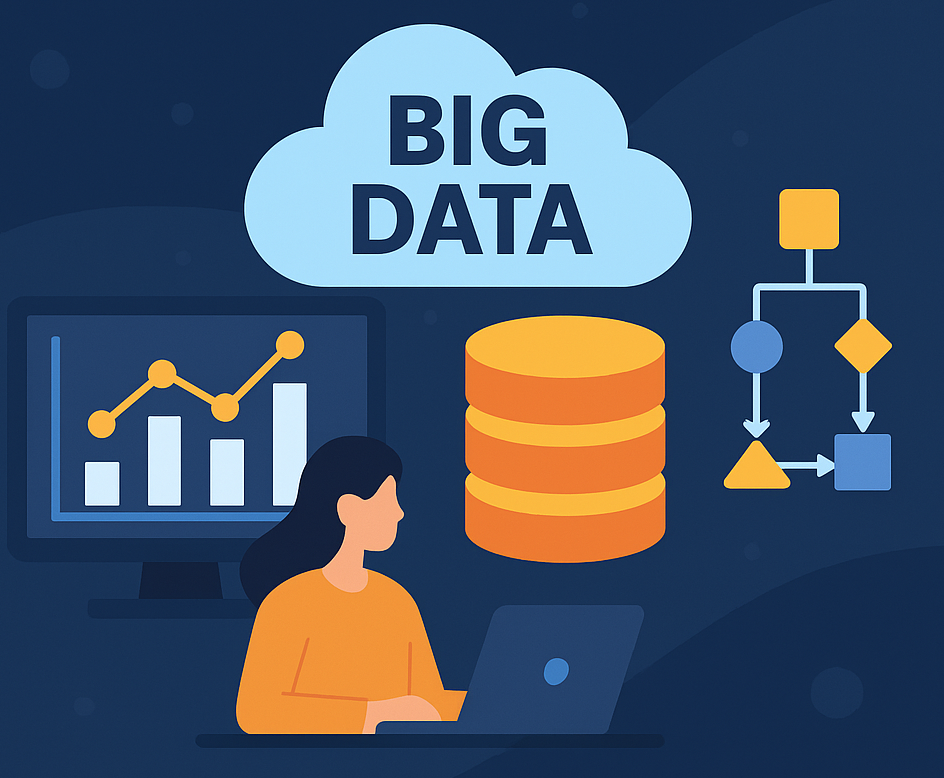
<p>In today’s data-driven marketing landscape, traditional analytics tools are struggling to keep pace with the ever-increasing deluge of information. The sheer volume, variety, and velocity of marketing data – website clicks, social media engagement, customer purchases, email campaigns, and more – overwhelms outdated systems.</p>

<p>This is where <strong>Big Data</strong> steps in, offering a life raft for marketers struggling to stay afloat. Big Data empowers you to harness this data deluge and transform it into actionable insights that fuel smarter campaign decisions and drive real business growth.</p>

<hr />

<h2 id="-the-slow-lane-traditional-data-storage-and-processing">🕰 The Slow Lane: Traditional Data Storage and Processing</h2>

<p>For decades, businesses relied on traditional data storage and processing methods. Imagine a filing cabinet overflowing with folders, each containing meticulously organized reports and spreadsheets.</p>

<p>This is akin to traditional data storage, which relies on:</p>

<h3 id="-relational-databases">📊 Relational Databases</h3>

<p>These databases store data in a structured, tabular format, with rows and columns defining specific data points. While efficient for analyzing smaller, well-defined datasets, relational databases struggle with the complexity and volume of Big Data.</p>

<h3 id="-batch-processing">💤 Batch Processing</h3>

<p>Traditional systems typically process data in batches, meaning they analyze information periodically, often overnight. This approach is slow and doesn’t provide real-time insights into customer behavior or campaign performance.</p>

<hr />

<h2 id="-the-limitations-of-traditional-methods">🚫 The Limitations of Traditional Methods</h2>

<p>While traditional methods served their purpose in the past, they fall short in today’s data-driven marketing world:</p>

<ul>
  <li><strong>Limited Scalability</strong>: Traditional systems struggle to handle the ever-growing volume of data generated by modern marketing campaigns.</li>
  <li><strong>Slow Response Time</strong>: Batch processing creates delays in analyzing data, hindering your ability to react to real-time customer behavior and campaign performance.</li>
  <li><strong>Limited Data Variety</strong>: Relational databases are designed for structured data. They struggle to handle unstructured data like social media posts or video content, which is crucial for a holistic understanding of customer behavior.</li>
</ul>

<hr />

<h2 id="-enter-the-big-data-powerhouse-stream-processing-and-data-lakes">⚡ Enter the Big Data Powerhouse: Stream Processing and Data Lakes</h2>

<p>Now that we’ve explored the limitations of traditional methods, let’s see how Big Data empowers you to break free from these constraints.</p>

<h3 id="-stream-processing">🔁 Stream Processing</h3>

<p>Imagine a system that can analyze all your marketing data in real-time, from website clicks to customer purchase history. This holistic, real-time view is what Big Data enables.</p>

<p>Two key technologies play a crucial role:</p>

<ul>
  <li><strong>Stream Processing Engines</strong>: Like the Michael Phelps of data analysis, stream processing engines like <strong>Apache Spark</strong> can analyze massive streams of data in real-time. This allows you to react to customer behavior and campaign performance instantly, making adjustments on the fly for maximum impact.</li>
</ul>

<h3 id="-data-lakes">🌊 Data Lakes</h3>

<h2 id="-investing-in-a-big-data-solution-a-stream-of-success-for-your-business">💼 Investing in a Big Data Solution: A Stream of Success for Your Business</h2>

<p>Our company is a leading provider of marketing analytics solutions powered by Big Data technologies like stream processing and data lakes. We understand the challenges of managing complex marketing data in real-time and the immense value of unlocking its potential.</p>

<p>Here’s how we can help:</p>

<ul>
  <li>✅ <strong>Expert Implementation</strong>: We guide you through the entire process, from data ingestion and stream processing to analysis and visualization in your data lake.</li>
  <li>🔄 <strong>Seamless Integration</strong>: Our solutions integrate seamlessly with your existing marketing tools and platforms, ensuring a smooth workflow.</li>
  <li>⚡ <strong>Actionable Insights in Real-Time</strong>: We don’t just provide data; we translate it into actionable insights delivered at the speed of business.</li>
  <li>📈 <strong>Measurable Results</strong>: We empower you to track the impact of your marketing efforts in real-time and measure your success against defined goals.</li>
</ul>

<hr />

<h2 id="-how-stream-processing-and-data-lakes-benefit-your-marketing-efforts">🚀 How Stream Processing and Data Lakes Benefit Your Marketing Efforts</h2>

<p>By incorporating stream processing and data lakes within your marketing analytics strategy, you can expect a range of significant advantages:</p>

<h3 id="-uncover-real-time-customer-insights">🔎 Uncover Real-Time Customer Insights</h3>

<p>Go beyond basic demographics. Stream processing allows you to analyze customer behavior as it happens, revealing real-time trends and preferences.</p>

<p>This empowers you to personalize marketing messages and offers in the moment, significantly increasing engagement.</p>

<h3 id="-personalized-customer-journeys">🧭 Personalized Customer Journeys</h3>

<p>Craft marketing journeys that feel like a custom-made adventure for each customer. By analyzing real-time behavior in the data lake, you can tailor content, recommendations, and promotions based on individual preferences, leading to higher conversion rates and customer satisfaction.</p>

<h3 id="-identify-fraudulent-activity">🔐 Identify Fraudulent Activity</h3>

<p>Fraudsters are getting smarter, but with stream processing, you can be too. Real-time analysis allows you to detect suspicious activity as it occurs, protecting your business from financial losses.</p>

<h3 id="-predict-future-trends">🔮 Predict Future Trends</h3>

<p>Don’t just react, predict! Big Data helps you anticipate future customer behavior and market trends. This foresight allows you to proactively develop marketing strategies that stay ahead of the curve and capitalize on emerging opportunities.</p>

<hr />

<h2 id="-dont-let-your-data-sit-still">🌊 Don’t Let Your Data Sit Still</h2>

<p>Don’t let your marketing data be a stagnant pool of untapped potential. By leveraging Big Data with stream processing and data lakes, you can create a real-time current of customer insights that propels your marketing campaigns and drives business growth.</p>]]></content><author><name>@infinitysugam</name><email>mishrasugam11@gmail.com</email></author><category term="Big Data" /><category term="Marketing" /><category term="Digital Marketing" /><summary type="html"><![CDATA[]]></summary></entry></feed>